
08 Jan How Table-Top Role-Playing Games Can Help With Therapy
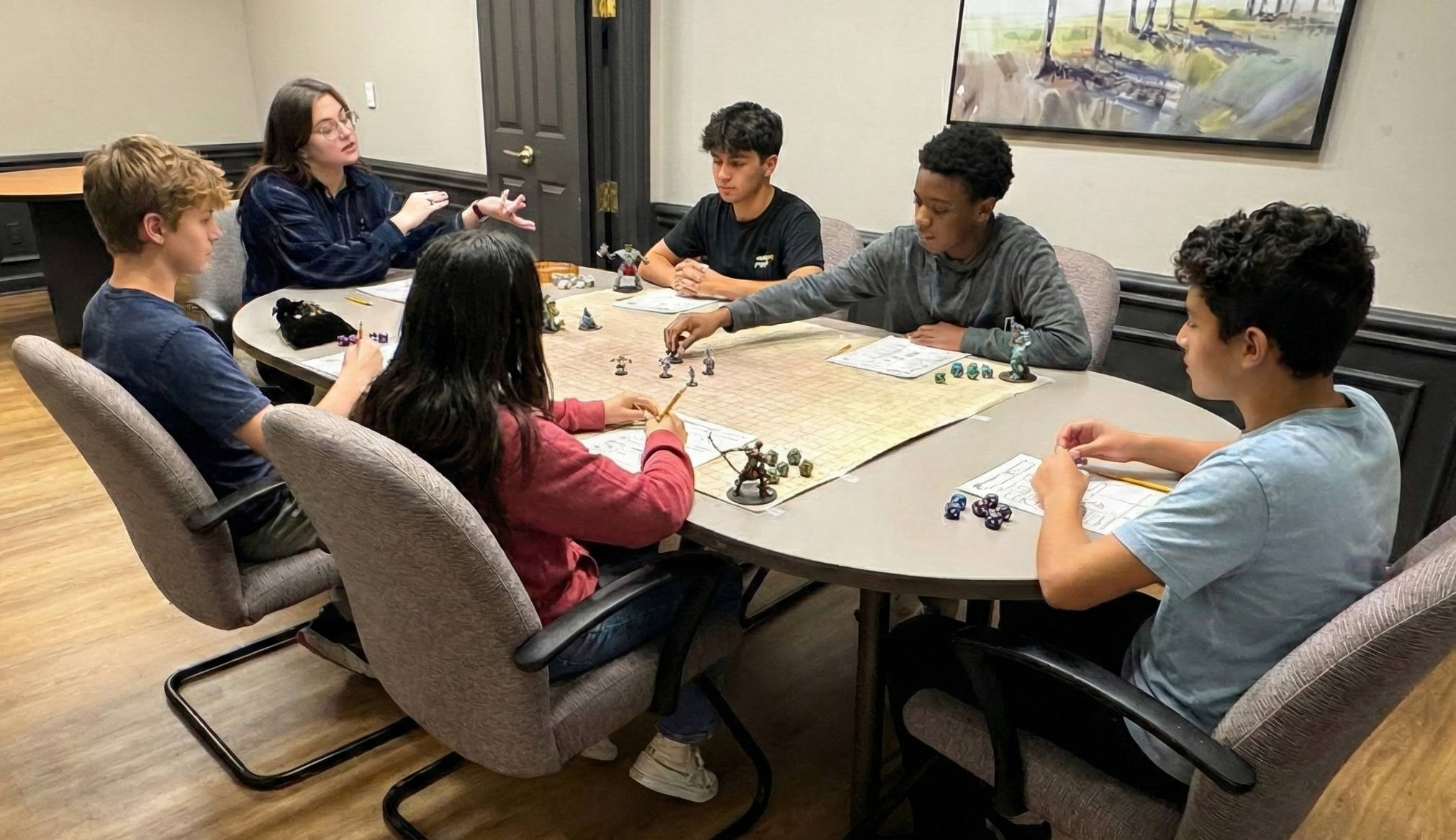
When most people think of tabletop role-playing games (TTRPGs), they picture dice, fantasy worlds, and epic adventures. What they may not realize is that these games can also be powerful tools for therapeutic growth. In recent years, clinicians have increasingly integrated TTRPGs, such as Dungeons & Dragons, into therapy to support social, emotional, and cognitive development in both adolescents and adults.
At their core, TTRPGs are collaborative storytelling experiences. Players create characters, navigate challenges, and make decisions together within a structured yet imaginative framework. This unique blend of structure and creativity makes TTRPGs especially well-suited for therapeutic work.
Why TTRPGs Work in Therapy
1. A Low-Pressure Way to Practice Real-Life Skills
TTRPGs allow clients to practice skills indirectly, through their characters. This creates emotional distance that can reduce anxiety and defensiveness. A client who struggles with assertiveness, for example, may find it easier to role-play confident communication through a character than to practice it directly in real life. Over time, those skills can generalize beyond the game.
2. Social Skills and Relationship Building
Group-based TTRPGs naturally promote:
- Turn-taking
- Active listening
- Perspective-taking
- Cooperation and teamwork
Players must collaborate to solve problems, manage conflict, and achieve shared goals. Therapists can observe social dynamics in real time and gently guide interactions, making the game an ideal setting for social skills development, especially for individuals with autism, ADHD, social anxiety, or difficulties with peer relationships.
3. Emotional Regulation and Coping Skills
In-game challenges often evoke frustration, excitement, disappointment, or uncertainty that mirror real-world experiences. Within the safety of the game, therapists can help clients:
- Identify emotional responses
- Practice calming strategies
- Tolerate uncertainty and setbacks
- Learn flexible thinking when plans change
Because the stakes feel meaningful but not overwhelming, TTRPGs offer a powerful rehearsal space for emotional regulation.
4. Executive Functioning in Action
TTRPGs require players to plan, organize, remember rules, track information, and adapt strategies. These demands naturally target executive functioning skills such as:
- Attention and focus
- Working memory
- Problem-solving
- Impulse control
- Goal-directed behavior
For clients who struggle with executive functioning, the game provides motivation and engagement that traditional skill-building exercises may lack.
5. Identity Exploration and Self-Esteem
Character creation is a therapeutic goldmine. Clients can explore different aspects of identity, such as strengths, values, fears, and aspirations, through their characters. Playing a brave, resourceful, or compassionate character can help clients see those qualities as possible within themselves.
Success in the game (overcoming obstacles, contributing to the group, being relied upon) can significantly boost confidence and self-esteem, especially for individuals who often feel unsuccessful in academic or social settings.
The Therapist’s Role in TTRPG-Based Therapy
In a therapeutic setting, the game is not just for entertainment. The therapist serves as:
- Facilitator: Structuring sessions and guiding the narrative toward therapeutic goals
- Observer: Noticing patterns in behavior, communication, and emotional responses
- Coach: Offering in-the-moment support, modeling skills, and prompting reflection
- Translator: Helping clients connect in-game experiences to real-life situations
Processing is key. Reflection before, during, and after gameplay helps clients make meaning of their experiences and apply insights beyond the table.
Who Can Benefit from TTRPG Therapy?
TTRPG-based interventions can be especially effective for:
- Adolescents and young adults
- Individuals with autism, ADHD, or learning differences
- Clients working on social skills or peer relationships
- Those struggling with anxiety, self-esteem, or emotional regulation
- Clients who benefit from experiential, strengths-based approaches
That said, TTRPGs can be adapted for many populations when thoughtfully facilitated by trained clinicians.
More Than a Game
Tabletop role-playing games offer something uniquely therapeutic: a shared story where clients can experiment, grow, and connect in meaningful ways. By blending imagination with intentional clinical guidance, TTRPGs transform play into a powerful pathway for skill-building, self-discovery, and connection.
Galvin Growth Group is proud to offer its own Dragons & Discovery groups for teens and young adults. These clinician-led groups use tabletop role-playing games as a therapeutic framework to help participants build social skills, strengthen emotional regulation, practice flexible thinking, and grow confidence in a supportive, small-group environment. Designed for adolescents and young adults who learn best through experience and connection, Dragons & Discovery blends creativity, collaboration, and evidence-based therapeutic support. Contact us today to learn more.
